Categories
What's New

Vintage Motorcycles

Share This:

A Design Journey

Vintage motorcycles are more than just machines—they are works of art. These timeless creations blend form and function, showcasing craftsmanship, style, and innovation. From their sleek curves to their gleaming chrome finishes, vintage motorcycles reflect a unique fusion of engineering and artistic expression.
For over a century, motorcycles have told stories of technological progress and cultural influence. Their evolution mirrors the trajectory of fine art, moving toward greater individuality and refinement. Let’s explore how these masterpieces came to embody both beauty and utility.


The Early Years: When Function Met Art

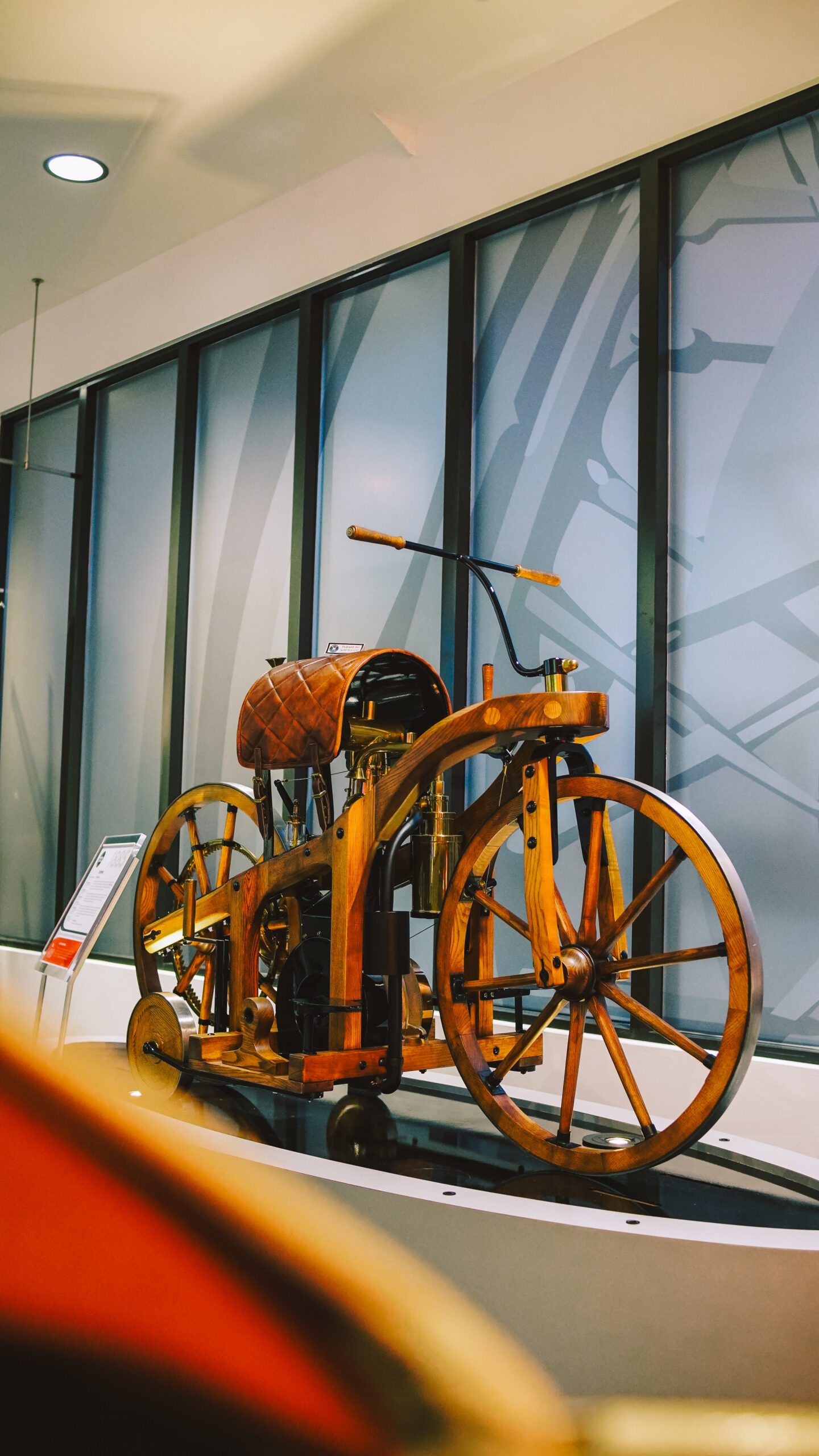
The journey of vintage motorcycles began with pure functionality. Engineers built early motorized bicycles, such as the 1894 Hildebrand & Wolfmüller, for practicality. Despite their simplicity, these designs carried a raw beauty. Exposed engines, clean lines, and basic frames combined form and function effortlessly.
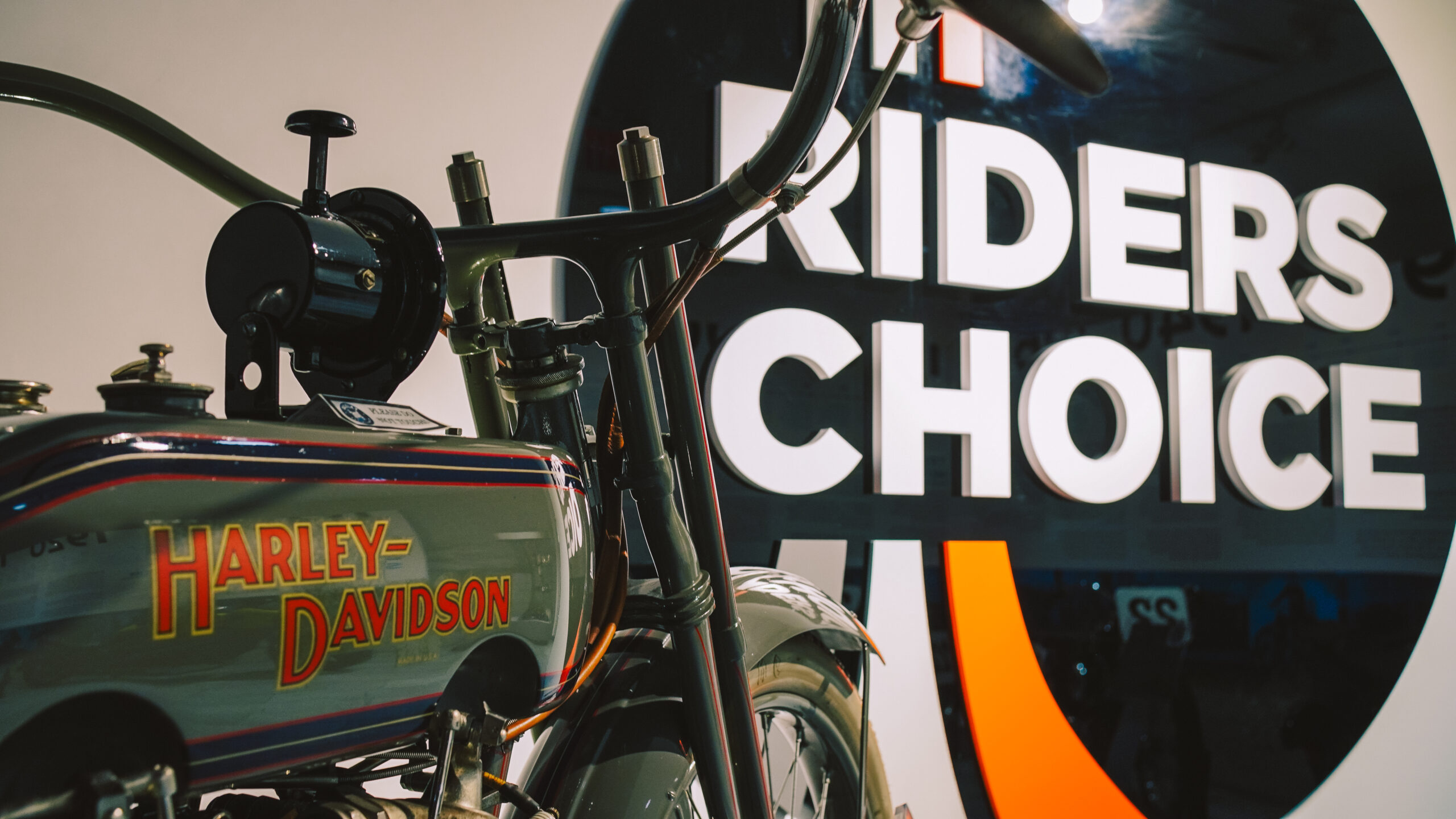
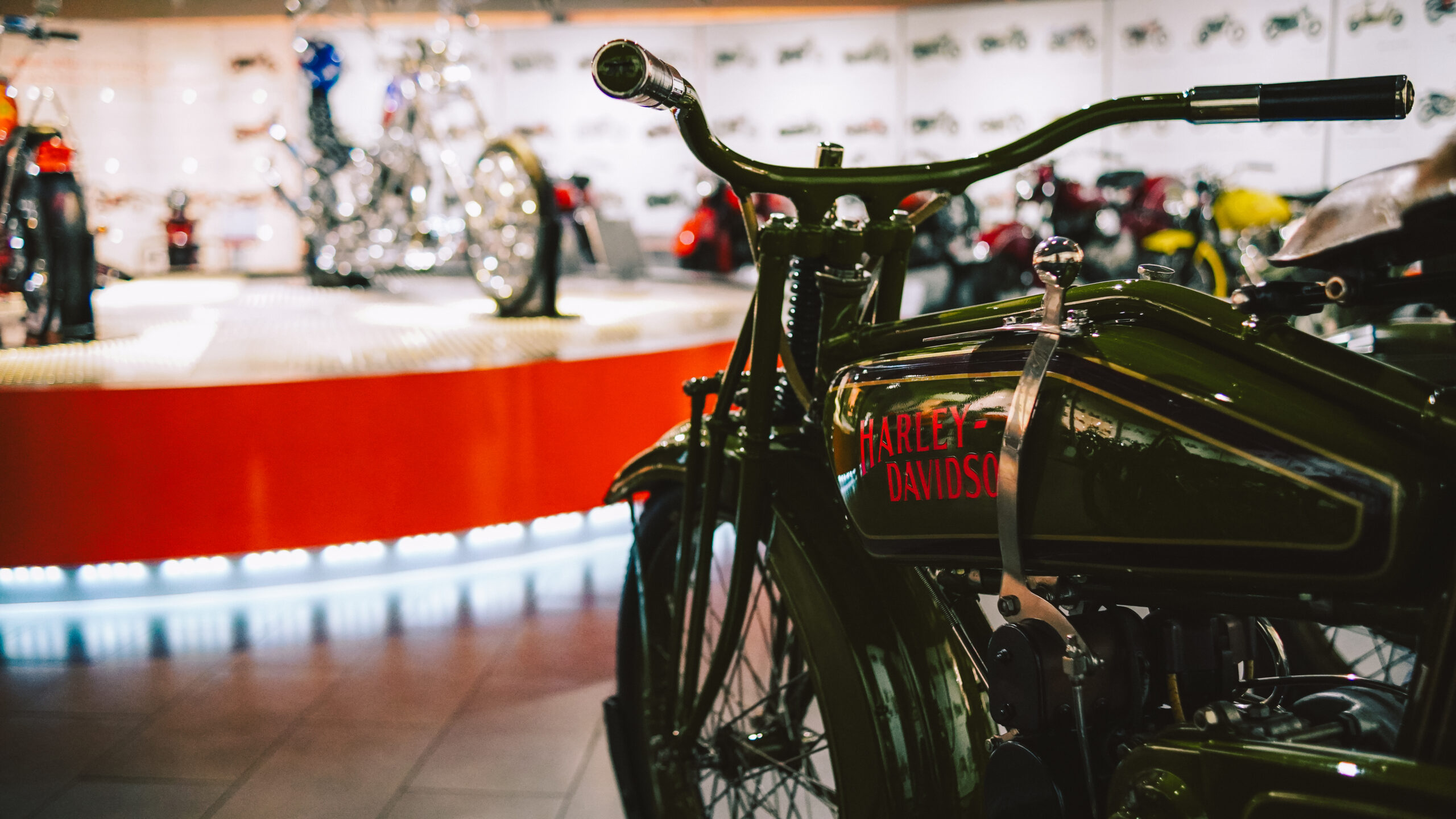
By the 1900s, brands like Harley-Davidson and Indian added their own artistic touches. Indian’s hand-painted logos and Harley-Davidson’s polished chrome were more than decorative—they were declarations of freedom and individuality. These early motorcycles, like the Indian Scout and Harley-Davidson V-Twin, laid the foundation for motorcycles as a form of artistic expression.


The 1920s–1930s: Streamlined Elegance

The 1920s and 1930s marked a shift toward streamlined designs influenced by the Art Deco movement. Motorcycles like the Indian Chief embraced sweeping curves and glossy finishes, echoing the era’s geometric and elegant aesthetic.

During this time, motorcycles were no longer just practical machines. They became visually captivating symbols of rebellion and freedom, much like the modernist art movements of the time. The Harley-Davidson V-Twin, for example, represented a bold, masculine design that contrasted sharply with its European counterparts.


The 1940s–1950s: British Minimalism

In the mid-20th century, British brands like Triumph, BSA, and Norton brought minimalist beauty to motorcycle design. Their sleek frames and streamlined fuel tanks embodied an understated sophistication reminiscent of the Bauhaus movement.
The Triumph Bonneville, with its perfect balance of precision and simplicity, became an icon of this era. British motorcycles reflected a commitment to intentional restraint—where every curve and line had a purpose. This era showcased the artistry of “less is more,” elevating motorcycles into cultural symbols.


The 1960s–1970s: Japanese Innovation Meets Art

The 1960s and 1970s revolutionized the motorcycle industry, thanks to Japanese manufacturers like Honda, Yamaha, Suzuki, and Kawasaki. These companies combined cutting-edge technology with artistic design, creating bikes that were as beautiful as they were functional.

Motorcycles like the Honda CB750 and Kawasaki Z1 became icons of this era. Their angular gas tanks, polished chrome, and compact frames exemplified mid-century modern design. These bikes were more than just modes of transportation—they were symbols of progress and style, redefining what motorcycles could be.


Motorcycles as Fine Art: The Enduring Legacy

Vintage motorcycles represent a unique blend of engineering and art. Their smooth lines, intricate details, and thoughtful designs make them timeless works of art. Each bike, whether a 1920s Indian Scout or a 1970s Kawasaki Z1, tells a story of visionaries who combined creativity and innovation.
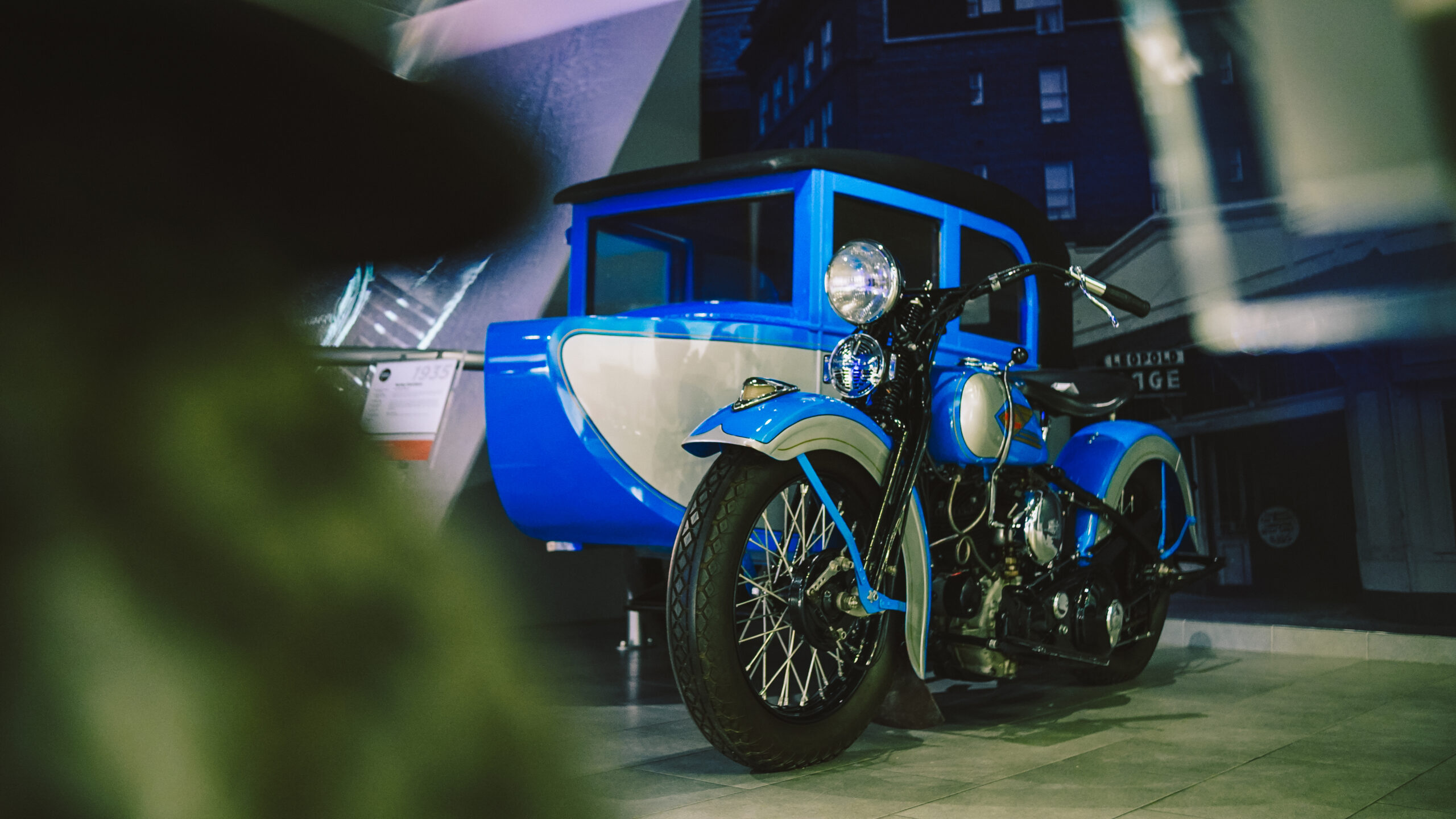
Motorcycles don’t just follow trends—they set them. For enthusiasts, these bikes are more than machines; they are rolling masterpieces. Next time you see a vintage motorcycle, take a moment to appreciate the artistry that bridges the worlds of engineering and design.
Share This:
Categories
What's New

A Guide for Corporate Event Planners

Share This:

Making the Most of an Unique Venue

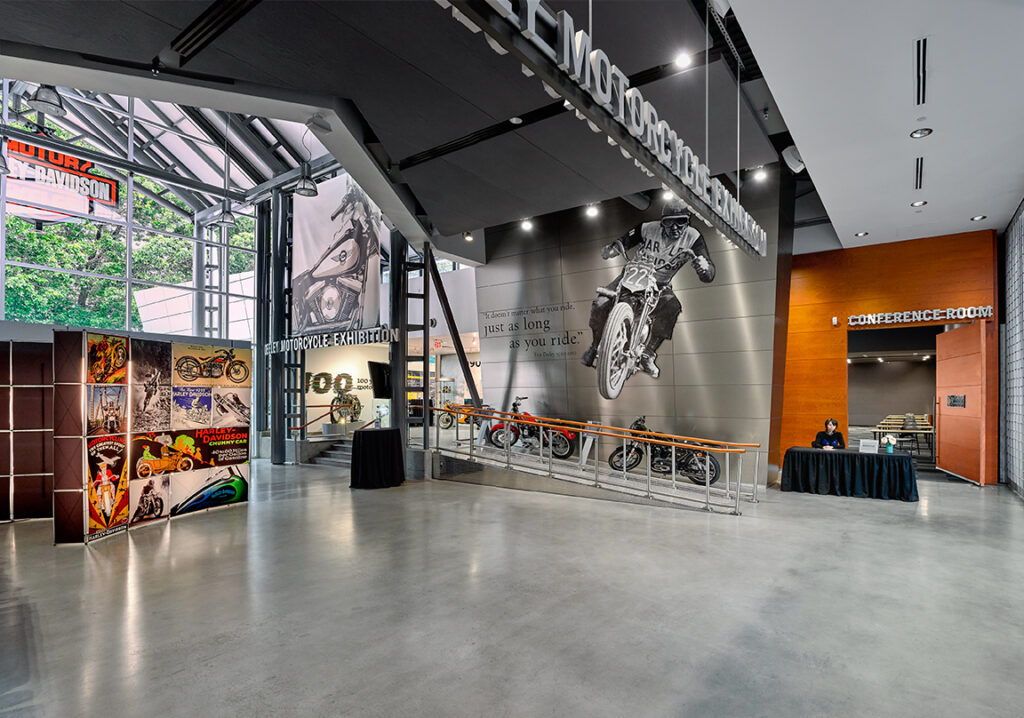
lobby and main foyer of deeley exhibition event venue conference facility and motorcycle museum
Foyer

When it comes to planning corporate events, finding a venue that stands out is essential. Traditional spaces like hotels and conference centers have their place, but hosting your event at an exhibition can elevate the experience. With their unique blend of creativity, sophistication, and visual appeal, unique venues provide the perfect backdrop for memorable and engaging events.

But how can you make the most of this unconventional setting? In this guide, we’ll explore practical tips and creative ideas to help you plan an event that inspires, impresses, and fosters meaningful connections.

1. Choose a Venue That Aligns With Your Event’s Goals

The venue you choose sets the tone for your event. When selecting a venue, consider how its theme and style align with your event’s purpose.

  • For an innovation-focused event, a gallery showcasing modern or futuristic art can set an inspiring tone.
  • For a casual networking event, galleries featuring vintage or historical exhibits create a relaxed, conversational environment.
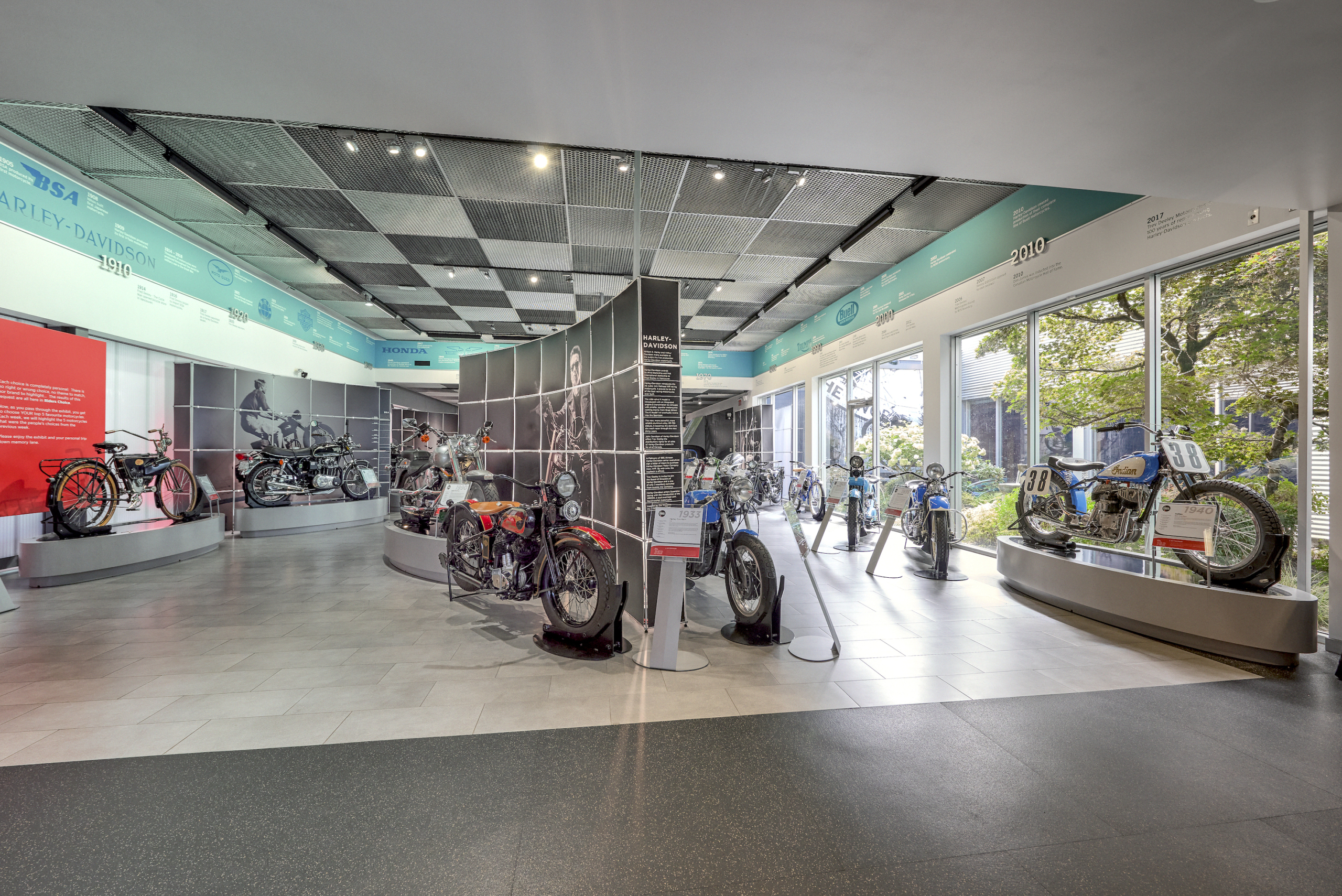
Wide-angle view of the Deeley Motorcycle Exhibition hall showcasing an extensive collection of vintage and classic motorcycles. The display includes various models from different eras, informational panels, and a timeline above the exhibits marking significant events in motorcycle history from 1910 to 2010. Large windows provide natural light and a view of the garden outside.
Museum entrance

Take time to explore venues that complement your event’s goals. A thoughtfully chosen space enhances your message and helps your attendees feel immersed in the experience.

2. Use the Art to Spark Engagement

Art naturally sparks curiosity and discussion, making it a fantastic tool for engaging attendees. Incorporate the gallery’s artwork into your event’s activities to make the experience more interactive.

  • Guided tours or talks: These can serve as icebreakers or networking opportunities.
  • Interactive discussions: Encourage guests to share their impressions of specific pieces or relate the art to your event’s theme.
  • Creative inspiration: For brainstorming sessions, use the art as a jumping-off point for group activities.

These elements not only enhance engagement but also create a deeper connection between your attendees and the event.

3. Embrace the Venue’s Unique Layout

Museums often feature open, flowing layouts that encourage exploration. Use this to your advantage when planning your event.

  • Networking clusters: Create stations or seating areas to encourage organic conversations.
  • Product displays: Position products against the gallery’s artwork for a visually impactful showcase.
  • Casual seating arrangements: Ditch the traditional conference rows for more relaxed setups that suit the gallery’s aesthetic.

By leveraging the venue’s natural flow, you can create an event that feels dynamic and inviting.

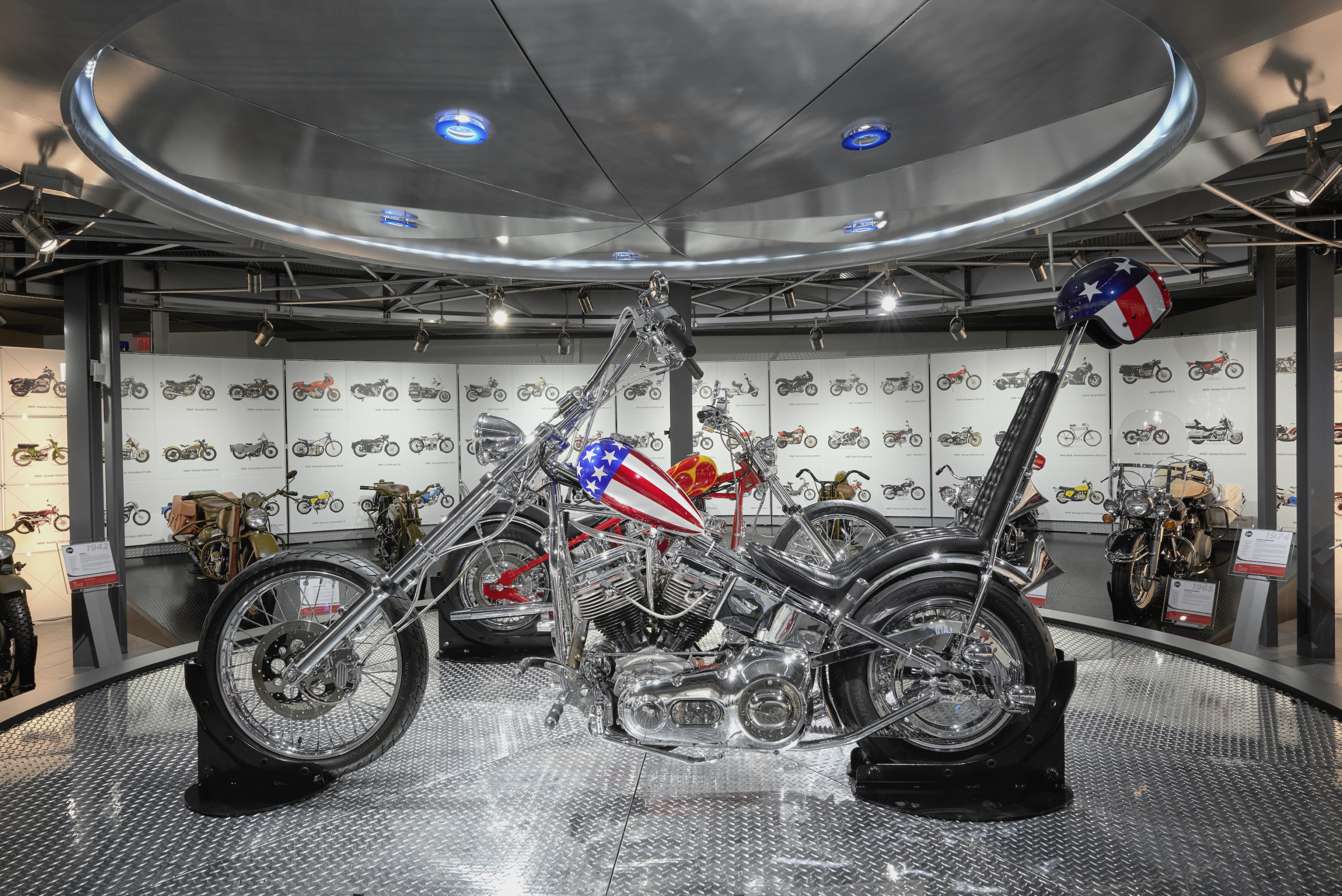
Showcase of a custom chopper motorcycle with a patriotic American flag design on the fuel tank and helmet at the Deeley Motorcycle Exhibition. The display is set on a polished metal platform under modern lighting, surrounded by a wall of historical motorcycle images and additional vintage bikes in the background.
Wheel Room

4. Add Interactive Elements for Greater Impact

Interactive experiences make events more memorable. Take advantage of the creative atmosphere to incorporate activities that go beyond the standard agenda.

  • Live demonstrations or workshops: Host hands-on sessions or live panels to engage your guests directly.
  • Technology integration: Use augmented reality (AR) or virtual reality (VR) to provide unique interactions with your products.
  • Photo opportunities: Set up a themed photo booth or create Instagram-worthy backdrops inspired by the gallery’s exhibits.

These interactive elements help attendees feel involved while also adding a layer of excitement to your event.

Birthday party

5. Incorporate the venue’s Theme or History

Museums often have rich histories or distinctive themes that can enhance your event’s narrative.

  • Introduce the history: Include a brief talk or guided tour to give your attendees a deeper appreciation for the venue.
  • Align with the exhibits: Design your event’s decor, music, or food to reflect the gallery’s current collection. For instance, a gallery featuring vintage motorcycles might inspire retro-themed cocktails or appetizers.

These touches help create a cohesive experience that feels tailored and meaningful.

6. Get Creative With Food and Drinks

Catering at a museum doesn’t have to be traditional. Let the gallery’s vibe inspire your menu.

  • Art-inspired dishes: Create visually stunning canapés or desserts that reflect the gallery’s exhibits.
  • Interactive food stations: Set up build-your-own options, like tapas bars or dessert tables, for a hands-on experience.
  • Unique cocktails: Design signature drinks inspired by the gallery’s theme.

Creative food and beverage choices not only enhance the experience but also leave a lasting impression on your guests.

Charcuterie and dessert platters

7. Leverage the Photogenic Appeal

Museums naturally provide beautiful backdrops for photos, making them ideal for creating social media buzz.

  • Instagrammable spots: Set up dedicated photo areas with props or custom installations.
  • Event hashtags: Encourage attendees to share their photos and tag your company using a branded hashtag.
  • Post-event content: Use these photos for follow-up marketing, showcasing the success of your event.

By emphasizing the gallery’s visual appeal, you can extend the life of your event through social media and digital content.

Final Thoughts

Hosting a corporate event at a unique venue is an opportunity to think outside the box. These venues offer an inspiring setting that fosters creativity, conversation, and connection. From leveraging the gallery’s unique layout to incorporating interactive elements and stunning visuals, there’s no limit to the memorable experiences you can create.

With careful planning and a touch of creativity, you can turn an art gallery into a venue that leaves a lasting impression on your guests. So, the next time you’re looking for an event space, consider stepping into the world of art—it just might transform your event into something truly extraordinary.

Share This:
Categories
What's New

The Revival of Japanese Vintage Motorcycles

Share This:

A Journey Through Style, History, and Culture

There’s an undeniable charm to vintage motorcycles—especially those with a story to tell. From Instagram to TikTok, classic bikes like the Honda CB750, Yamaha RD350, and Kawasaki Z1 are trending. These icons of Japanese engineering are making a major comeback. Their revival is driven not only by their timeless appeal but also by the influence of anime and the global rise of Asian pop culture. As a result, a new generation of enthusiasts is embracing these vintage Japanese motorcycles, valuing both their mechanics and the rich culture they represent.

The allure of these vintage bikes isn’t just in their looks or performance. Instead, it’s in the stories they tell and their connection to broader cultural shifts.

The Historic Rise of Japanese Vintage Motorcycles

Icons of Innovation and Style

In the 1960s and 1970s, Japanese motorcycle brands transformed the industry. Honda, Yamaha, Kawasaki, and Suzuki didn’t just create reliable bikes—they built legends. Models like the Honda CB750, Yamaha RD350, and Kawasaki Z1 were not only advanced mechanically but also visually stunning. Consequently, their sleek designs continue to inspire enthusiasts today.

The Global Impact of Japanese Motorcycles

During this time, Japan emerged as a leader in innovation. These motorcycles reflected a pioneering spirit. They were ahead of their time—sleek, stylish, and often more distinctive than their European or American competitors. Because of this, they became symbols of coolness. Today, they embody a timeless identity that resonates with both nostalgia and modern culture.

Anime and Asian Pop Culture: Fueling the Revival

How Anime Made Motorcycles Cool

The resurgence of Japanese vintage motorcycles owes much to the global rise of anime and Asian pop culture. For instance, iconic works like Akira, Cowboy Bebop, and Initial D feature motorcycles not just as vehicles but as symbols of rebellion and adventure.

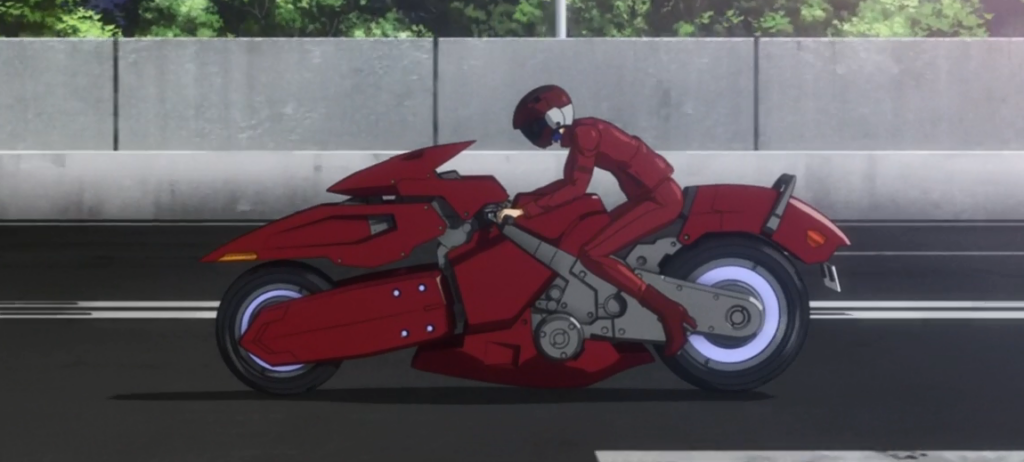
In Akira, Kaneda’s red bike became an icon of anime and cyberpunk culture. It wasn’t just a prop; instead, it represented youth, defiance, and freedom. Similarly, Initial D, though focused on car racing, highlighted the speed and precision associated with Japanese bikes.

Pop Culture’s Influence on Bike Design

Moreover, the aesthetics and philosophies of these anime series have influenced real-world motorcycle culture. It’s no longer just about owning a bike for nostalgia. Instead, riders are drawn to the anime-inspired individuality and adventure these bikes represent.

The Vintage Motorcycle Scene Today

The Cultural Movement Around Vintage Bikes

The connection between anime and Japanese vintage motorcycles feels natural. As a result, younger riders are drawn to the timeless designs of 1960s and 1970s bikes, engaging with a global cultural movement. Asian pop culture—including anime, manga, music, and fashion—has never been more influential. Consequently, this energy extends to vintage motorcycles.

Custom Builds Inspired by Anime

Meanwhile, the custom bike scene also reflects anime’s influence. Builders often incorporate minimalist designs and clean lines reminiscent of Akira or Ghost in the Shell. As a result, these customizations blend the classic aesthetics of vintage bikes with contemporary Japanese style, creating a unique fusion of old and new.

The Artistic Legacy of Japanese Vintage Motorcycles

Blending Form and Function

Vintage motorcycles are more than machines—they’re works of art. For example, the Honda CB750 and Kawasaki Z1 are celebrated not just for their engineering but for their elegance. These bikes represent a perfect blend of form and function.

A Connection to Craftsmanship

Each detail, from angular gas tanks to polished chrome finishes, reflects Japanese craftsmanship. Because of this attention to detail, owning one of these motorcycles is like owning a piece of art—functional, timeless, and inspiring.

Why Vintage Japanese Motorcycles Are Here to Stay

More Than a Passing Trend

The rise of anime, K-pop, and Japanese fashion reflects a global appreciation for Japanese culture. As part of this movement, vintage Japanese motorcycles have become significant. They symbolize innovation, rebellion, and craftsmanship—qualities that resonate with today’s generation.

Joining a Global Phenomenon

For today’s riders, these bikes are more than machines. Instead, they’re links to a global cultural moment. From anime-inspired builds to vibrant online communities, the vintage motorcycle scene is thriving. Therefore, if you’ve ever considered joining this movement, now is the perfect time.

Final Thoughts: A Journey Through Time and Culture

Vintage Japanese motorcycles are more than vehicles; they’re living pieces of history and culture. Whether you’re drawn to their powerful engines, sleek designs, or anime-inspired aesthetics, these bikes offer a unique way to connect with the past and the present.

So grab your helmet, hop on a vintage Japanese motorcycle, and ride into a world of adventure, style, and history.

And if you want to check out our private collection, visit The Deeley Motorcycle Exhibition.

Share This:
Categories
What's New

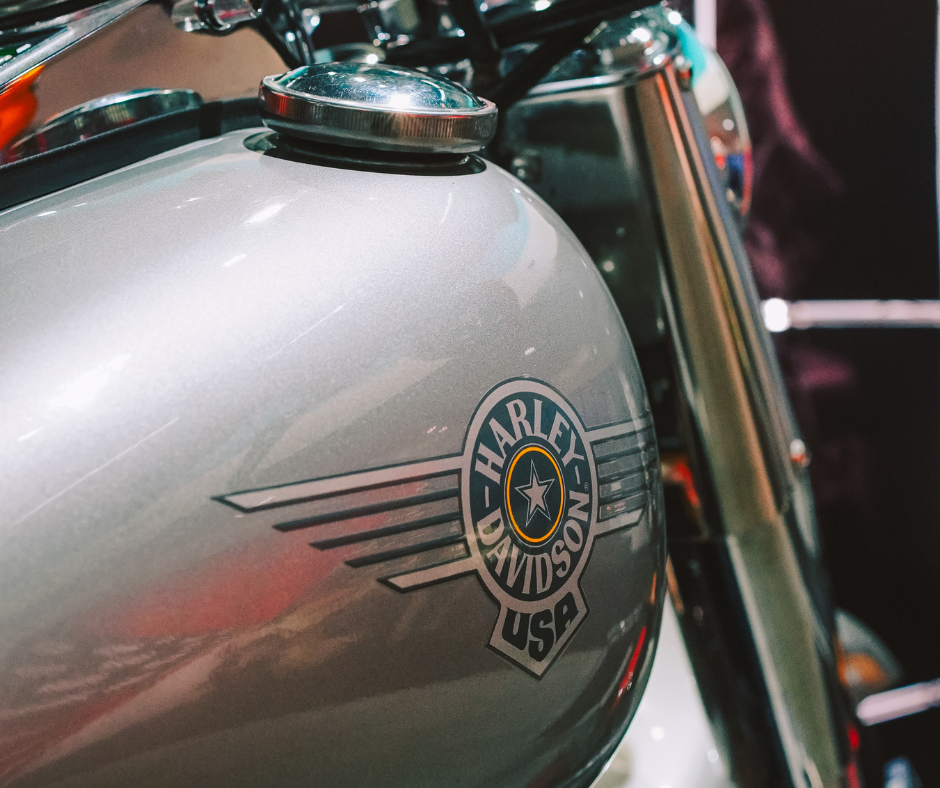
Discover the Harley-Davidson Fat Boy

Share This:

An American Icon of Freedom

The Harley-Davidson Fat Boy isn’t merely a motorcycle; rather, it’s a profound symbol of American freedom and rebellion. Introduced in 1990 by visionary designers Willie G. Davidson and Louie Netz, the Fat Boy quickly became one of Harley-Davidson’s most iconic models. With its unique design, powerful engine, and unparalleled comfort, it has captivated cruiser enthusiasts around the globe.

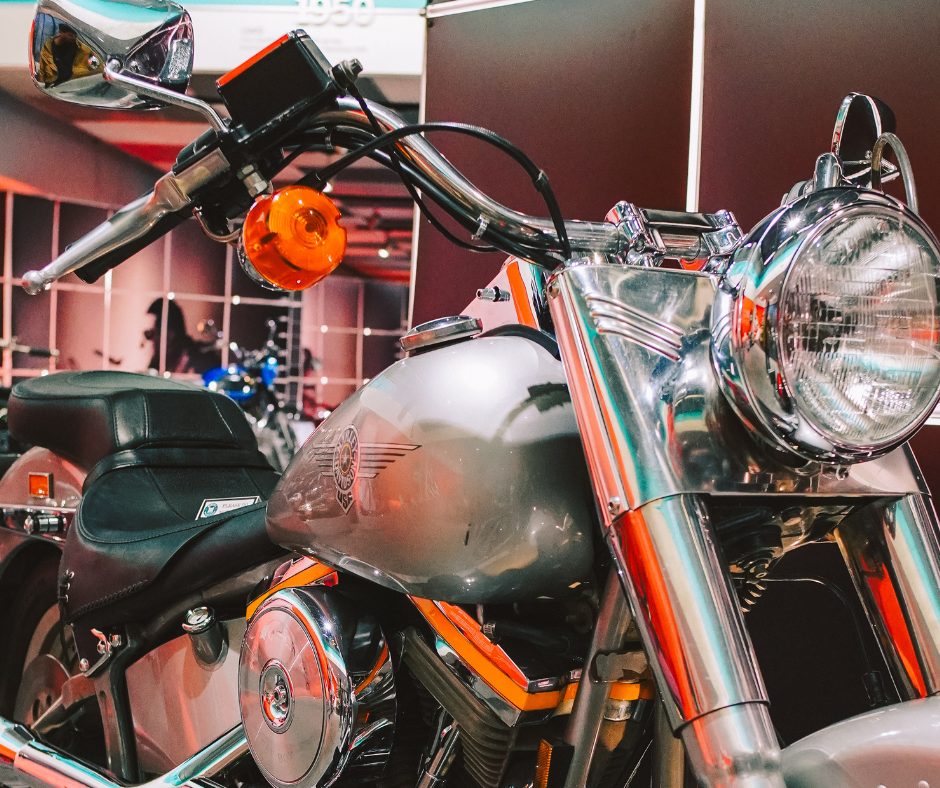
Harley-Davidson Fat Boy – Deeley Motorcycle Exhibition

A Deep Dive into History, Design, and Specifications

The Fat Boy draws inspiration from the 1980s FLSTF Fat Bob models. It showcases a timeless design with a round headlight, teardrop-shaped fuel tank, wide fenders, and a plush two-up seat.

Additionally, the Fat Boy has a muscular stance. It features high handlebars, forward-mounted foot controls, and a low seat for a commanding presence on the road.

Under the hood, the Fat Boy is powered by a robust 1,868cc air-cooled V-twin engine. This engine produces 93.8 horsepower and 155 Nm of torque.

Moreover, the power is paired with a 6-speed transmission and reliable disc brakes on both wheels. This setup ensures a smooth and powerful ride.

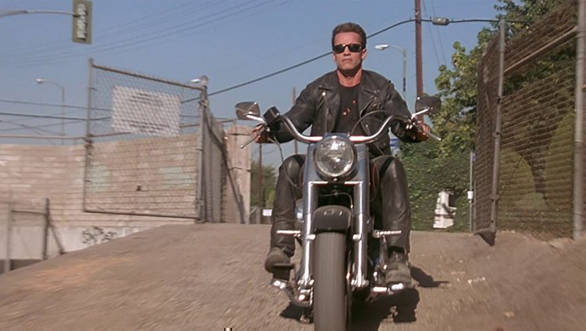
Scene of the film Terminator 2

The Fat Boy’s Cultural Impact

Interestingly, the Fat Boy gained legendary status with its iconic appearance in the 1991 film Terminator 2: Judgment Day, where Arnold Schwarzenegger’s character famously rode it. This moment not only propelled the motorcycle into global fame but also solidified the Fat Boy’s status as not just a bike, but a cultural phenomenon.

Check out the official Terminator 2: Judgment Day trailer here!

Experience the Fat Boy at the Deeley Exhibition

Today, the Harley-Davidson Fat Boy remains a top choice for riders seeking a blend of style and power. Therefore, if you’re an enthusiast or simply curious to experience this iconic motorcycle firsthand, we invite you to visit the Deeley Exhibition. Here, you can explore our display featuring the Fat Boy alongside a diverse collection of motorcycles that span the history of this remarkable industry.

Plan Your Visit

Experience the iconic Harley-Davidson Fat Boy at the Deeley Exhibition. Additionally, our diverse collection highlights the evolution of motorcycles. We emphasize their cultural significance and engineering excellence. We look forward to welcoming you and sharing this journey through motorcycle history!

Share This:
Categories
What's New

5 Tips to Throw an Event They’ll Remember

Share This:

Planning a successful event takes more than just a good idea.  It requires organization, clear communication, and the right team in place.  Whether you’re hosting a corporate meeting, a social gathering, or a full-blown conference, these five tips will ensure your event runs smoothly and leaves a lasting impression.


1. Plan Like a Pro:

The foundation of any successful event is a solid plan.  This includes creating a timeline that outlines key tasks, deadlines, and milestones.  Don’t forget to factor in logistics like attendee registration, seating arrangements, and transportation.  And of course, you’ll need a detailed financial plan that considers all your expenses, from venue rental to catering


2. Make Your Conference Room a Success Station:

The venue sets the stage for your event, and here at Deeley Exhibition – a unique venue, we are confident our conference room can be the perfect fit.  We offer a versatile space that can be configured to accommodate a variety of event formats and sizes. Looking for a full-service experience?  We can provide everything you need, from delicious catering and amazing audio/visual (AV) equipment to experienced in-house managers and support staff to ensure your event runs seamlessly.  Prefer to bring in your own vendor?  No problem!  Our venue buyout option allows you rent our facility so that you can customize the event to match your vision.


3. Partner Up for Success:

No event is a one-person show.  Reliable partners and suppliers can take a big load off your shoulders.  This could include catering companies, equipment rental services, marketing teams, or even entertainment providers.  Do your research and choose partners with a proven track record and a reputation for excellence.

4. Communication is Key:

Once you’ve assembled your team, clear communication is essential.  Align your expectations with every supplier and vendor involved.  Provide detailed briefs outlining exactly what you need from them, and make sure they understand your vision for the event.  The more transparent you are, the smoother everything will run.

5. Learn and Grow:

Every event, no matter how successful, offers valuable learning opportunities.  Take some time after the event to analyze what went well and areas for improvement.  Gather feedback from attendees, partners, and staff.  Use this information to refine your planning process and ensure your next event is even more spectacular.  By continually learning and adapting, you’ll become an event planning pro!

Following these tips will put you well on your way to hosting memorable and successful events. If you are looking for a unique place with an amazing service, our team is here to help you.


Now go forth and make your event-planning dreams a reality!

Share This:
Categories
What's New

Ultimate Guide to Finding Your Ideal Motorcycle

Share This:

In this comprehensive guide, we aim to navigate through the diverse landscape of motorcycles, dissecting the features and purposes of various models. Our goal is to empower you to make an informed decision that aligns with your personal style, preferences, and the adventures you envision on the open road.

 Dirt Bike 

Conquer the Off-Road Terrain 

Tailored for off-road adventures with higher suspension and an upright riding position. 

Examples: Honda CRF450X, KTM 450 EXC-F, Yamaha WR450F.  

Suitable for both beginners and experienced off-road enthusiasts. 


Sport Bike 

Embrace Velocity and Precision 

Engineered for speed and agility with high-tech components and a forward-leaning riding position. 

Examples: Suzuki GSX-R1000, Kawasaki Ninja ZX-6R, Ducati Panigale V4. 

Recommended for intermediate and experienced riders. 


Dual-Sport

The Best of Both Worlds 

Blending dirt and sport bike features for versatile riding on and off the road. 

Examples: BMW F 850 GS, Honda Africa Twin, KTM 790 Adventure. 

Suitable for both beginners and experienced riders. 


Cruiser 

Relaxed Cruising for On-Road Comfort 

Crafted for comfortable on-road journeys with a lean-back riding position. 

Examples: Harley-Davidson Softail Deluxe, Indian Scout Bobber, Yamaha Bolt. 

Suitable for both novice and experienced riders. 


Touring Bike 

The Ultimate Cross-Country Companion 

Large bikes with superior comfort, are equipped for extended journeys. 

Examples: Honda Gold Wing, BMW K 1600 B, Harley-Davidson Electra Glide. 

Suitable for riders of all skill levels. 


Tourer 

Versatility Meets Comfort 

Hybrid of sport and touring bikes, perfect for long-distance road trips. 

Examples: Yamaha Tracer 900, Suzuki V-Strom 1050, Kawasaki Versys 650. 

Suitable for riders of all skill levels. 


Supermoto 

Dual-Purpose Fun for On-Road Adventures 

Merging dirt bike stance with street bike speed and grip. 

Examples: Husqvarna 701 Supermoto, KTM 690 SMC R, Aprilia Dorsoduro 900.  

Multipurpose design suitable for various skill levels. 


Scooter 

Stylish and Practical City Commutes 

Visually appealing with advanced features, ideal for city commuting. Low seat height for an upright riding position. 

Suitable for riders of all skill levels. 

Examples: Vespa Primavera 150, Honda PCX150, Yamaha XMAX 300. 


Bagger 

Streamlined Touring for Weekend Getaways 

Minimalist touring bikes for relaxed weekends, customizable for comfort. 

Examples: Indian Chieftain Dark Horse, Harley-Davidson Street Glide Special, BMW K 1600 B Grand America.  

Vintage aesthetics with an average seat height.  Recommended for seasoned riders. 


Bobber 

Stripped-Down Style for Daily Commutes 

Functional and customizable for daily use, providing an upright riding position. Great fuel efficiency and minimalist design. 

Examples: Triumph Bonneville Bobber, Indian Scout Bobber Twenty, Harley-Davidson Forty-Eight.  

Suitable for riders of all skill levels. 


Retro-Classics 

Nostalgia Meets Modern Performance 

Old-school aesthetics with modern technology for a unique riding experience. A versatile choice with varying maintenance needs. 

Examples: Royal Enfield Interceptor 650, Yamaha XSR900, Moto Guzzi V7 III. 

Suitable for riders of all skill levels. 


Electric 

Eco-Friendly Riding for the Future 

100% electric, quiet, and beginner-friendly, with various models including high-performance options. Low maintenance and environmentally conscious.  

Examples: Zero SR/F, Harley-Davidson LiveWire,  

Suitable for riders of all skill levels. 


Moped 

Vintage Styling for Urban Adventures 

Vintage aesthetics, ideal for city commutes with smaller engines. 

Examples: Honda Metropolitan, Piaggio Vespa, Harley-Davidson Topper 

Automatic or electric-powered, suitable for all skill levels. 


Hyperbike 

Extreme Power for Thrill-Seekers 

Advanced, high-powered sportbikes for maximum speed and cutting-edge technology. 

Examples: Kawasaki Ninja H2, Ducati Superleggera V4, Suzuki Hayabusa. 

Not recommended for beginners, ideal for short-distance rides. 


Standard Roadster 

Versatile and Practical All-Purpose Riding 

Simple and versatile with mid-sized engines, suitable for various types of rides. 

Examples: Triumph Street Triple, Kawasaki Z900, Honda CB650R.  

Neutral, upright riding position for riders of all skill levels.  


In the diverse world of motorcycles, selecting the perfect ride is a blend of personal preferences, riding style, and the adventures you dream of. Whether you seek the thrill of off-road escapades, the speed of sport bikes, the comfort of touring, or the classic aesthetics of retro bikes, there’s a motorcycle type tailored to your needs.  

So, as you embark on this exhilarating journey, choose wisely, gear up, and let the open road become the canvas for your unforgettable experiences. 


Share This:
Categories
What's New

The Versatility Factor: Possibilities in Our Unique Venue

Share This:

Nestled on the Vancouver-Burnaby border just off Highway 1, our one-of-a-kind venue had a remarkable evolution. What was once a warehouse is now a distinctive event space that seamlessly blends vintage charm with modern amenities.
Allow us to take you on a journey through our unique event venue in Vancouver and take a glimpse into the rich and diverse history of motorcycles.

A Glimpse Inside our space

    The Motorcycle Museum

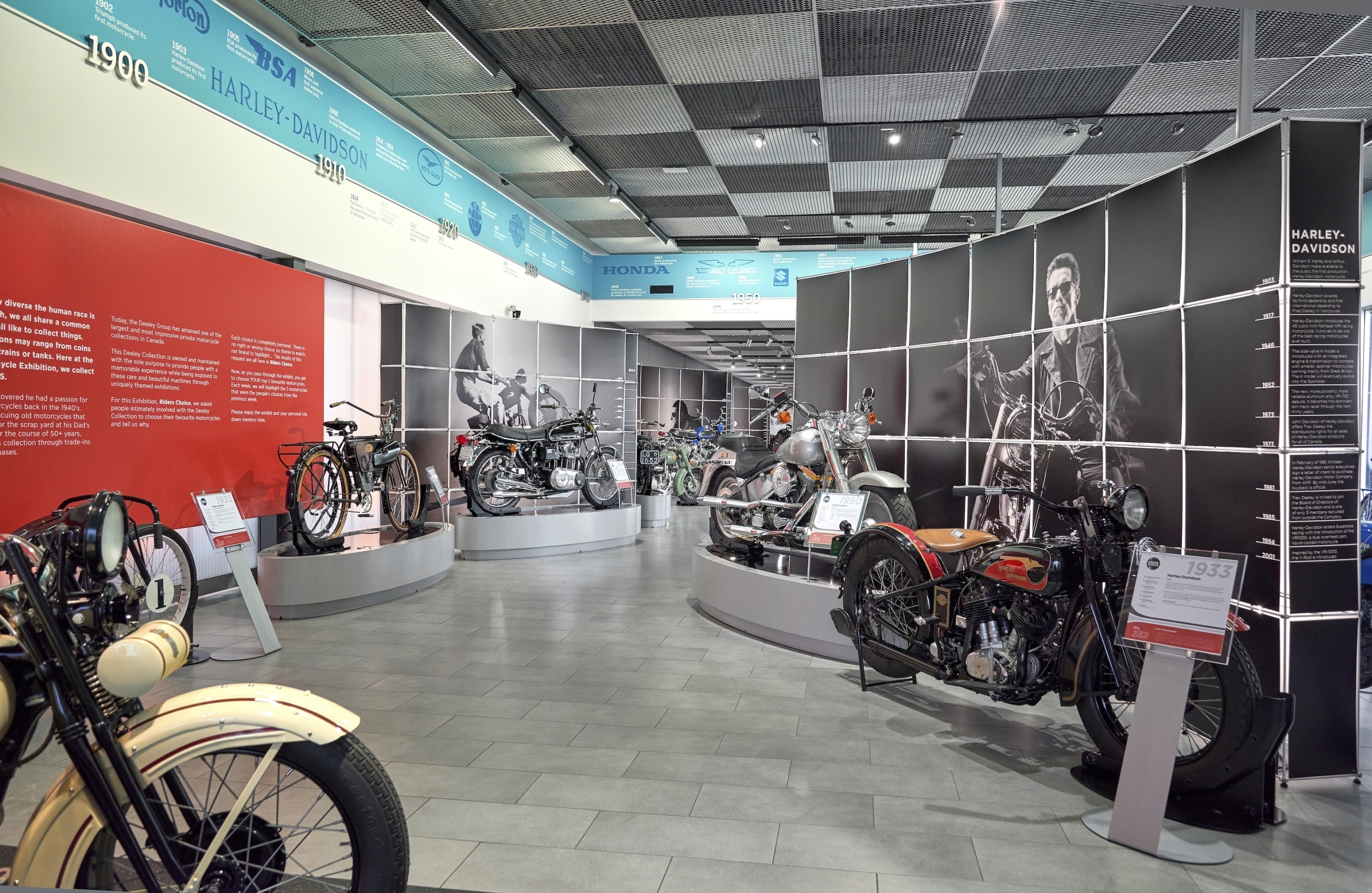
    the image shows our Vintage Motorcycle Exhibition

    As you step into our venue, you’ll be greeted by a curated vintage motorcycle museum that pays homage to the rich history of motorcycling. The carefully selected collection showcases the evolution of these iconic machines, providing a unique backdrop for your event.

      The Conference Room

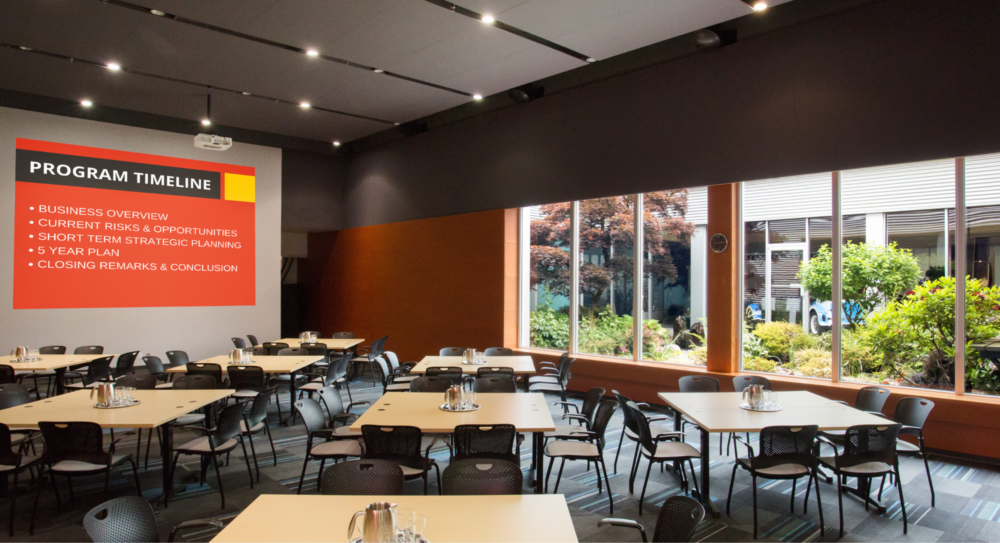
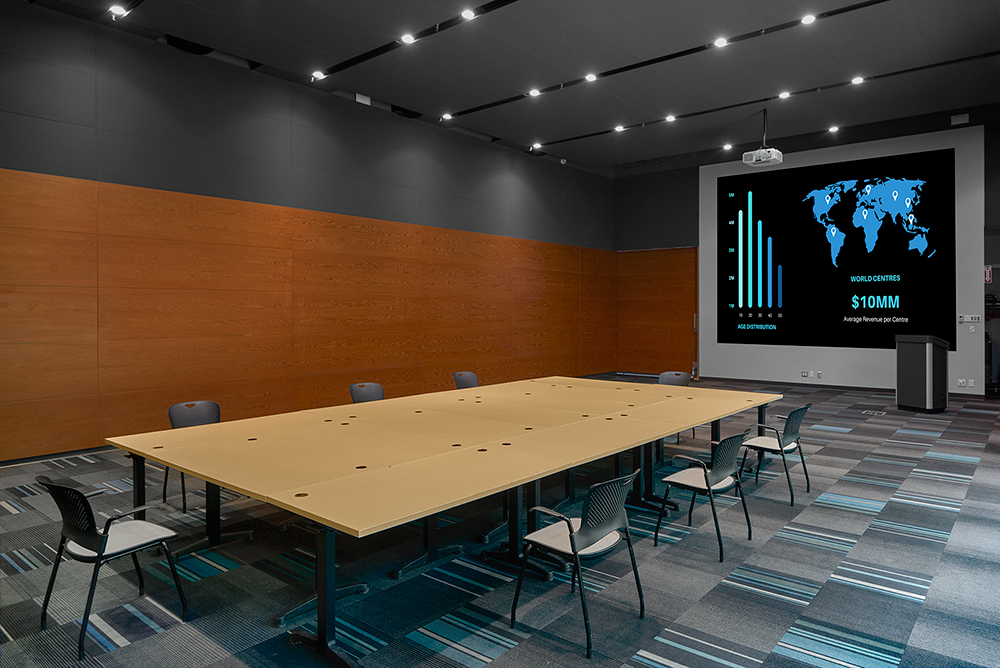
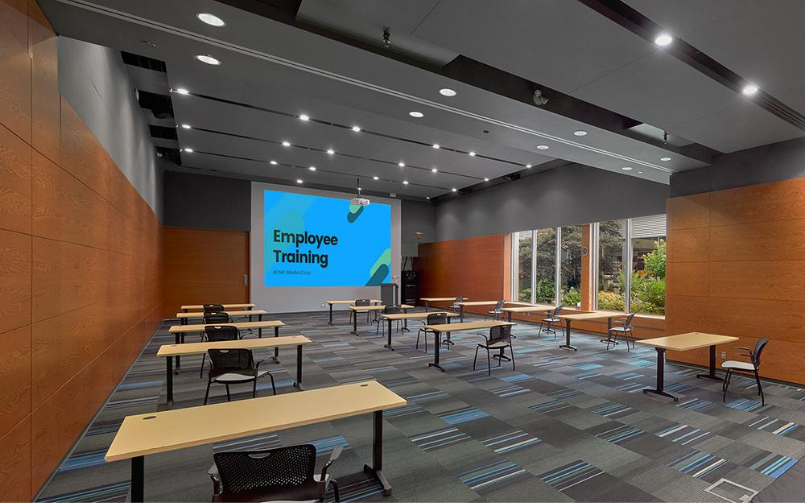
      The image shows a meeting layout of the conference room

      Comfort and functionality are our focus. Our conference room boasts a modern interior design and top-notch AV amenities. The space overlooks a beautifully groomed courtyard, offering a tranquil setting for gatherings, because every successful meeting provides a time to rest and recharge and your attendees deserve an environment to match!

      The flexible space hosts a variety of meetings, from trade shows and job fairs to presentations, training seminars and evening cocktail parties.

        The Multi-Functional Foyer

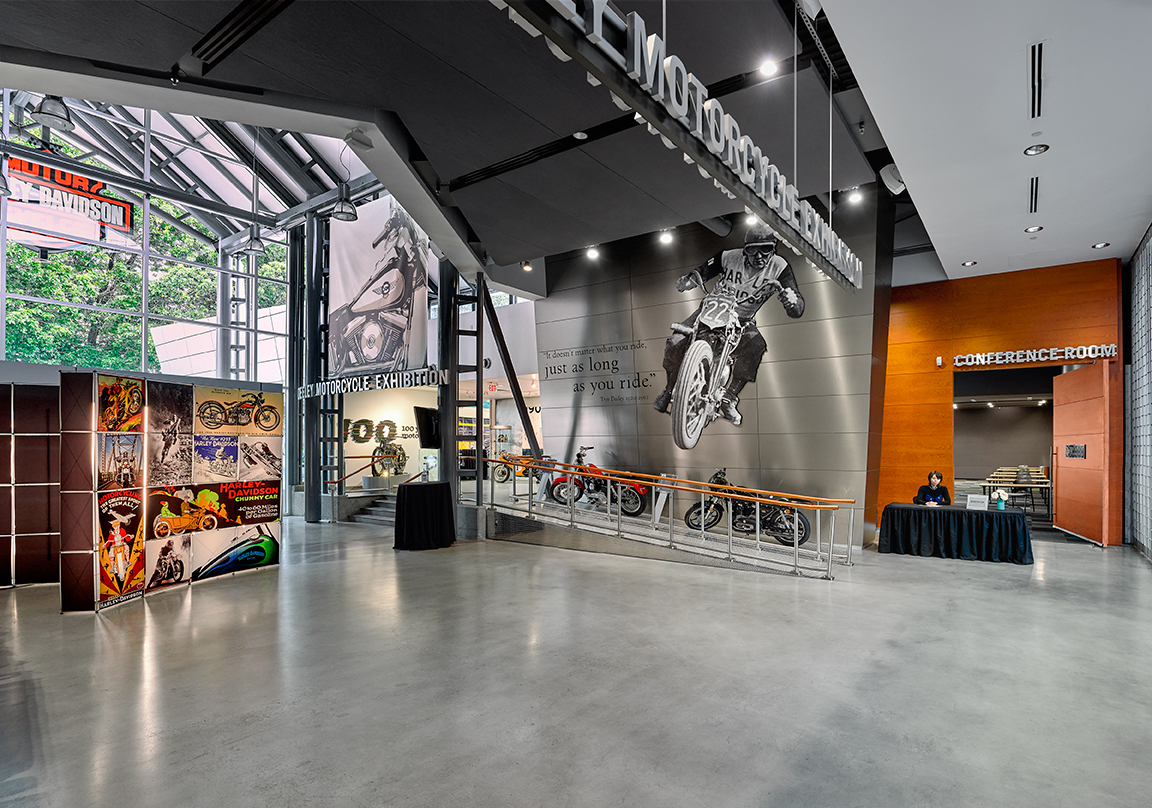
        For larger gatherings or evening events, our open foyer and the motorcycle exhibition seamlessly integrates with the conference room. This provides a versatile space that adapts to your specific needs.

        The image shows the foyer with a modern design and a registration table in the entrance of the conference room

          Amenities That Elevate Your Experience

          Free Parking: Convenience begins right at our doorstep with complimentary parking in our front lot and on surrounding streets.

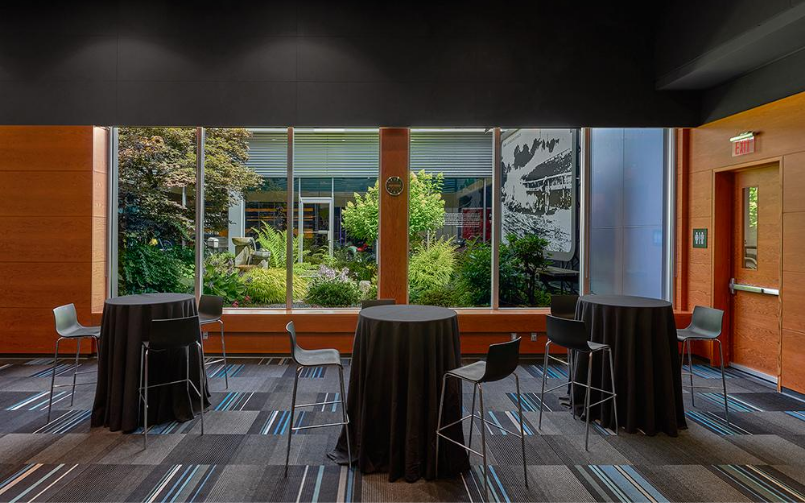
          Natural Sunlight: Bask in the glow of natural light streaming through our carefully designed spaces, creating a warm and inviting atmosphere.

          The image shows the green courtyard and the natural sunlight

          AV System: Our state-of-the-art audiovisual equipment ensures your message is heard loud and clear.

          The image shows one of the layouts available in our conference room. This one is a classroom style

          Private Wi-Fi: Stay connected with confidence, knowing you have your own secure network for uninterrupted productivity.

          Accessibility for All: We believe that every guest should feel welcome and comfortable. Our venue is fully accessible, with wheelchair-friendly routes and a lift for ease of movement.

          Tailored Spaces for Your Event: With adjustable square footage ranging from 1,350 to 1,800 square feet, you can customize our conference room to suit your event’s unique requirements.

          Our dedicated event experts are on hand to guide you towards the perfect setup, ensuring a seamless experience for you and your guests.

          Services and Costs Made Simple: We understand that each event is unique. That’s is why we offer flexible rental options based on 4 and 8-hour windows. Whether you’re looking for a partial space rental or a full venue buyout, we have options to suit every need.

          Beyond Venue Rental: For full venue buyout events, we allow outside catering. Should you require services or equipment beyond our offerings, we’re happy to connect you with our trusted network of preferred suppliers.

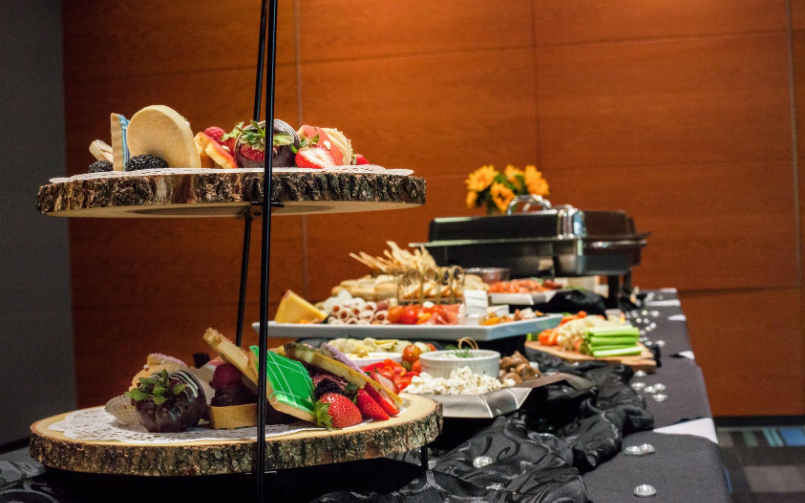
          Platters with a diverse range of foods and appetizers

          To schedule a visit to our unique Vancouver event venue or inquire about booking, please don’t hesitate to reach out.

          We can’t wait to welcome you to our unique venue.

          Want to check out more information about our venue? Follow us on Instagram!

          Share This:
          Categories
          What's New

          Our Vintage Show & Shine is back!

          Share This:

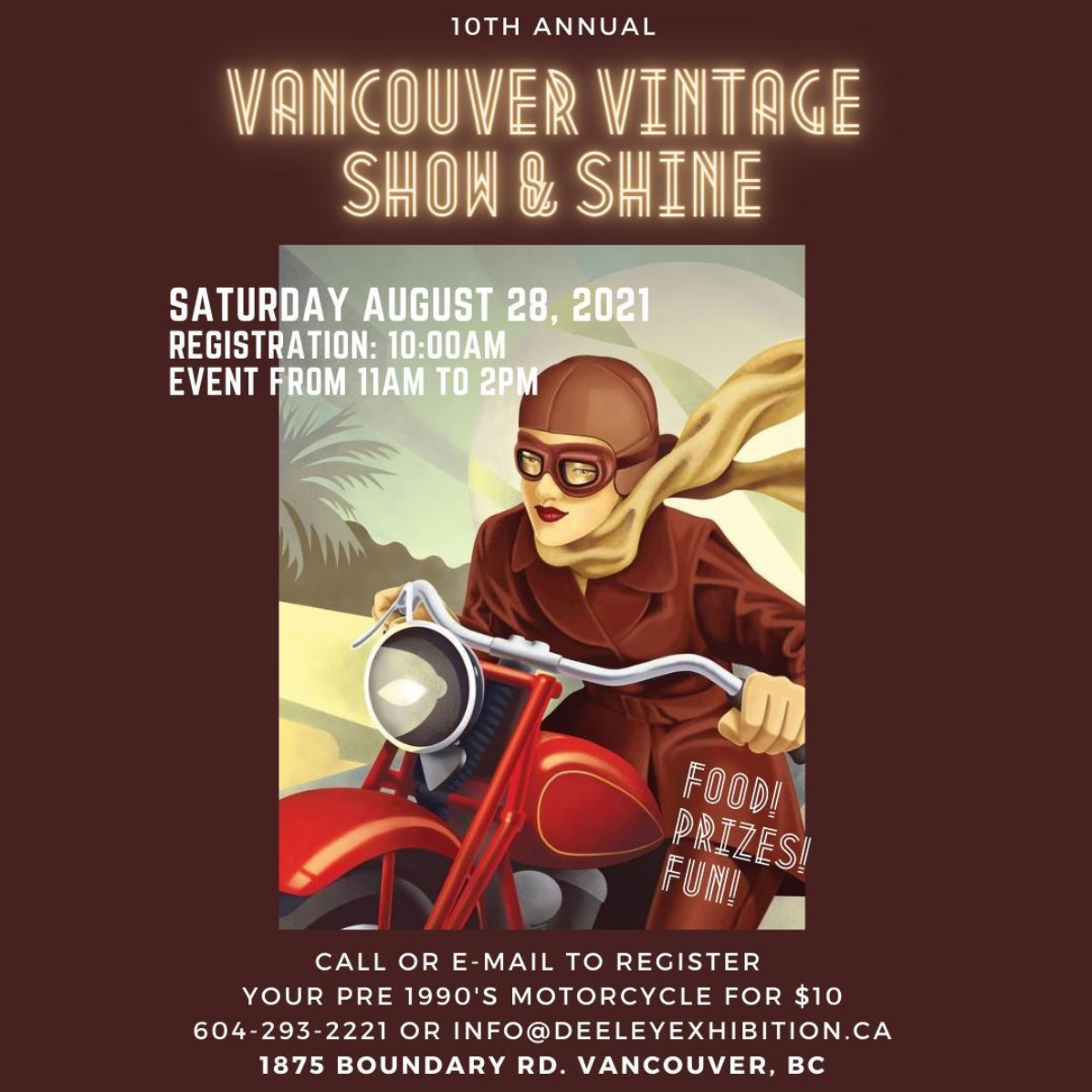
          Are you dying to show off your Vintage motorcycle after a year of social distancing? Whether you ride or not, come down Saturday, August 28 for the 10th Annual Vancouver Vintage Motorcycle Show & Shine at the Deeley Exhibition!

          Select rare motorcycles from the collection will be on display plus don’t miss seeing our newest exhibit RIDERS CHOICE. Bikes, food, and a good time to be had by all!

          Vintage Motorcycle owners register for $10, which includes a free lunch, a poster plus be part of the public’s choice for favourite motorcycle.

          For more information or to pre-register, call us at 604 293 2221 or email info@DeeleyExhibition.ca. Registration begins at 10:00 AM and the event will run from 11:00 AM to 2:00 PM.

          Stay tuned with event announcements on our Facebook event page!

          Share This:
          Categories
          What's New

          5 Things to Consider When Selecting a Meeting Venue: Pandemic Edition

          Share This:

          Now that we have a better understanding of COVID-19 and the best practices to mitigate transmission, we want to get back to live meetings.  Training and education can be delivered virtually but if you are a company investing in the training of your staff, you want to be certain your message or content is being delivered.  When the biggest cost of a meeting is the expense of employee’s salaries and their absorption of your message or training, the cost savings of a virtual meeting may not be worth it.  Similarly, for corporate strategy and planning sessions, face to face interactions bring teams together in a way that cannot be accomplished remotely.  The live meeting still plays an important role in communication.

          But the virus has changed how we can get together.  Social distancing requirements have brought on a host of considerations when planning your meeting.  Here are some of the things you have to consider when organizing your next event in this age of COVID-19.

          1. Capacity

          When planning your meeting, know how many people will be in attendance before selecting your venue.  Aside from the local or federally mandated gathering maximums, all venues are struggling with seating layouts and capacities.  For example, hotels that may have been previously able to host 400 people for dinner at 8 persons per 6 foot round table find that they can now only seat 2 people per table.  Compound this 75% reduction in guests per table with the requirement to spread tables at least 6’ apart, where previously, the tables would be placed much closer together.   Long story short, your favourite unique venue may no longer have the capacity to service your 50 person meeting anymore.

          2. Price

          Have a good (but realistic) idea of your overall budget (Rental, AV, food and beverage, staffing, etc.) prior to your search. While most of the events industry is doing everything they can to keep pricing consistent to pre-pandemic levels, the cost per attendee will most likely be higher.  

          3. Safety Protocols

          Ask your venue about their COVID-19 related policies and what your requirements will be.  Whether you are hosting an internal corporate planning session or a public training seminar, you want to know that your selected venue has mandatory safety policies including pre-event health declaration waivers, enhanced cleaning provisions, pre-assigned seating, food and beverage distribution protocols and contact tracing processes.

          4. Air Circulation

          Ceiling height and routinely maintained HVAC systems have an impact on the transmission of COVID-19.  Check that your all day meeting venue has the air circulation your guests will need to feel comfortable and safe.

          5. Access to the Outside

          Venues that have easy access to open or outside areas allow attendees the opportunity to connect while socially distanced during break times, as well let guests get a breath of fresh air!  

          While virtual meeting movement may be growing, it cannot replicate the in-person experience.  If you are looking for a unique venue for meetings under 25, please give us a call (778-231-4249) to see if the Deeley Exhibition may be the right fit for you!    

          Share This:
          Categories
          What's New

          20 Years Later, Speed Week 1998 and The Deeley Exhibition’s Own Historic Bonneville Run

          Share This:

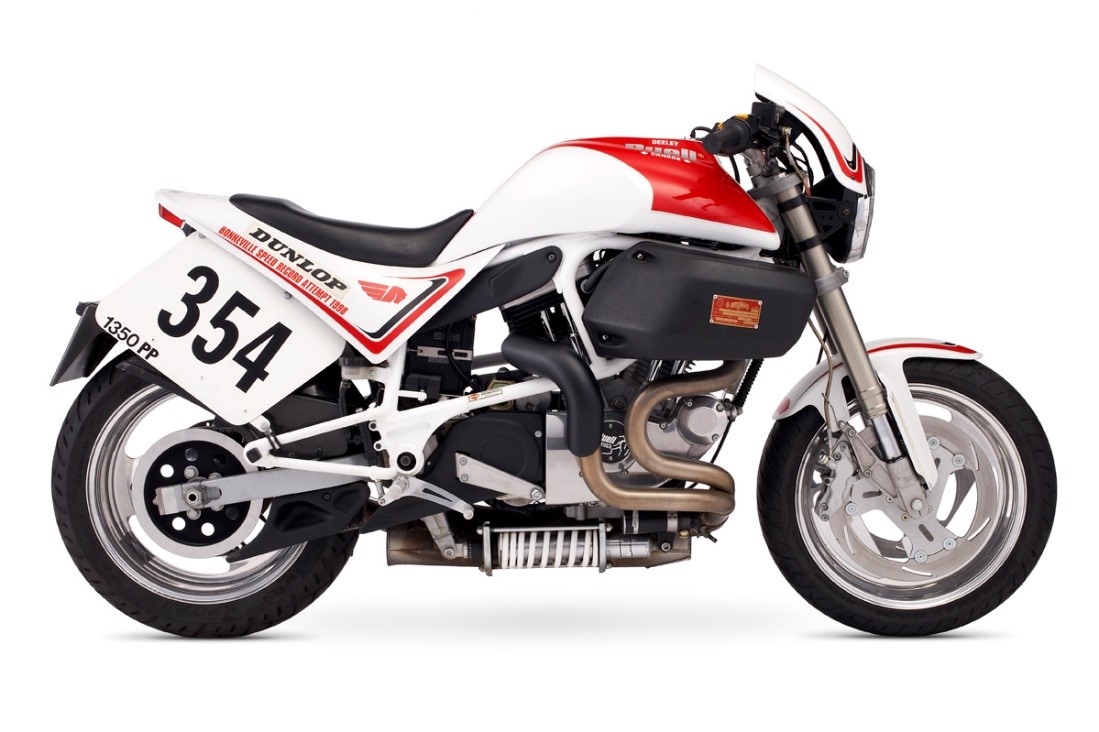
          Speed Week 2018 is in the books and a number of records were broken. To celebrate, yours truly at the Deeley Motorcycle Exhibition dusted off our own Bonneville champion, the 1998 Buell Lightening S1.

          The 1998 Buell Lightning S1 – 1350 cc Production-Push Rod Class land speed record breaker (Photo courtesy of The Deeley Exhibition).

          To celebrate the 20-year anniversary of the Buell’s record-breaking run, I sat down with two members of Team Deeley; Shane Kenneally, the record setting racer and Terry Rea, the Crew Chief, and revisited the events leading up to and including the big race on August 7, 1998.

          Bonneville Speed Week – August 1998 (Photo courtesy of Darwin Osarchuk).

          So how did this idea of racing the Lightening S1 at Speed Week come about?

          Shane Kenneally, Racer: I did some mathematical calculations on my slide rule and realized it was possible for the Lightening to break 150 mph. After doing the math, I walked into the Deeley Exhibition and discussed this with Terry.

          Terry Rea, Crew Chief: Right off the bat I should tell you that Trev (Deeley) was not keen on the idea of us racing at Bonneville. We had to convince Trev that straight-line racing was racing since he was never interested in land speed records. To him racing was dirt/flat track not drag or time trials.

          Shane Kenneally: But this was where the idea sprung from. Trev and I spoke about this further on a number of occasions and eventually we put a team together.

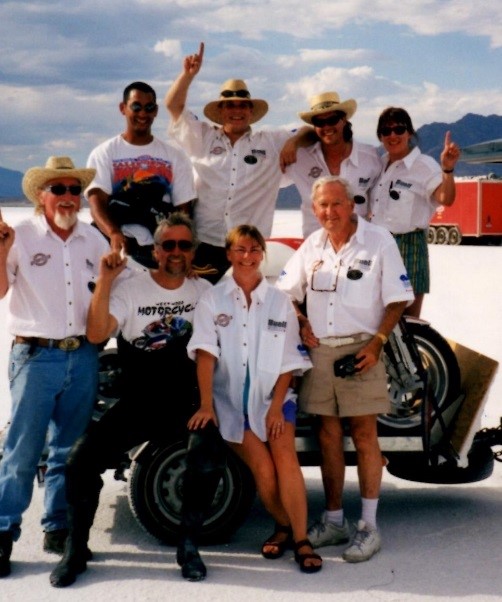
          Team Deeley: Back Row – (left to right) Jason McVickers (Racer), Peter Sellers (Technician), Mike Rowland (Project Manager/Bike Builder), Michelle Wilson (Head Office Admin). Front Row – Terry Rea (Crew Chief), Shane Kenneally (Racer), Debbie Kenneally (Shane’s wife), Trev Deeley. Missing: Len Creed, Steve Drane (Photo courtesy of The Deeley Exhibition).

          Terry Rea: Even though Shane did his slide rule calculations, Trev still called the Buell engineers and asked if their bikes could reach 150 mph; they said it was not possible. Trev was skeptical but both Shane and I challenged him saying it could be done.

          What was so special about this motorcycle?

          Rea: The Lightening was an unmodified bike. The only things we did were get European belts and sprockets for better gas mileage and a steering dampener to control wobbling. As a matter of fact, we entered the bike into the 1350cc Production-Push Rod Class but in reality, our bike was only 1200cc. We were giving up 150cc!!

          I heard there were some issues leading up to the race. What happened?

          Rea: The engine suffered serious damage on the dynamometer the day before it was scheduled to leave. Over-revving bent a pushrod and we didn’t have a spare! We managed to find a dealer in Victoria (Steve Drane) who had one but it was lost at the bus depot. I had to bribe the terminal workers with a Harley test ride so they would search for it. We repaired the bike at the very last minute, rode it from the back of the shop to the front and loaded it into the trailer. Since we needed to be there the next day, Jason McVickers and I drove all night to get there in time.

          Kenneally: I didn’t even know the pushrod was broken. I had left before everyone else. Trev flew everyone there except Terry and Jason who drove.

          Rea: We had to detour through Prosser, WA. which added 2 extra hours to the drive. The tech inspection at Bonneville was closing at 5pm and we rolled up at 4:30; 22 hours after we started! The first run wasn’t until the next morning though.

          So now you’ve made, how was race day?

          Kenneally: The weather was great, it was hot!

          Rea: We had traction the whole way, tires were not slippery.

          Kenneally: I did three runs altogether. The first run hit 132 mph (the record was 144) but the bike was misfiring on the top end. I jetted out the carbs a couple of times and the second run was 142 mph. Peter Sellers (Team Deeley Mechanic) jetted out the carbs twice more. On our third run we broke 150 mph. We did our return run the next morning, again over 150 mph, so our average was 150.022 mph, a new record!

          Rea: Bonneville has its own radio station so after the third run as I was nearing the CB radio I heard, “That’s a new track record set by Trev Deeley Racing!” Trev and I ran to the truck and listened enthusiastically. That was the first time I ever saw Trev running (Terry muses).

          What was the reaction like from the crowd?

          Rea: There were congratulations all around as everyone celebrated that the rookies set the record! Trev asked me how I knew the Buell would beat 150 mph and I answered, “Shane’s Slide rule!”

          Kenneally: I was pretty close to my calculation (Shane laughs). Eric Buell said 144 mph was the best the Lightening could do. They did hundreds of runs but we beat them in only three. It was hard to get Trev excited, but he was pleased with the Buell record. Looking back, the Buell was very stable, the most rock-solid bike I ever raced in Bonneville. It was just “waaaaahh’ing along” and I was just sitting there watching the mountains fly by…

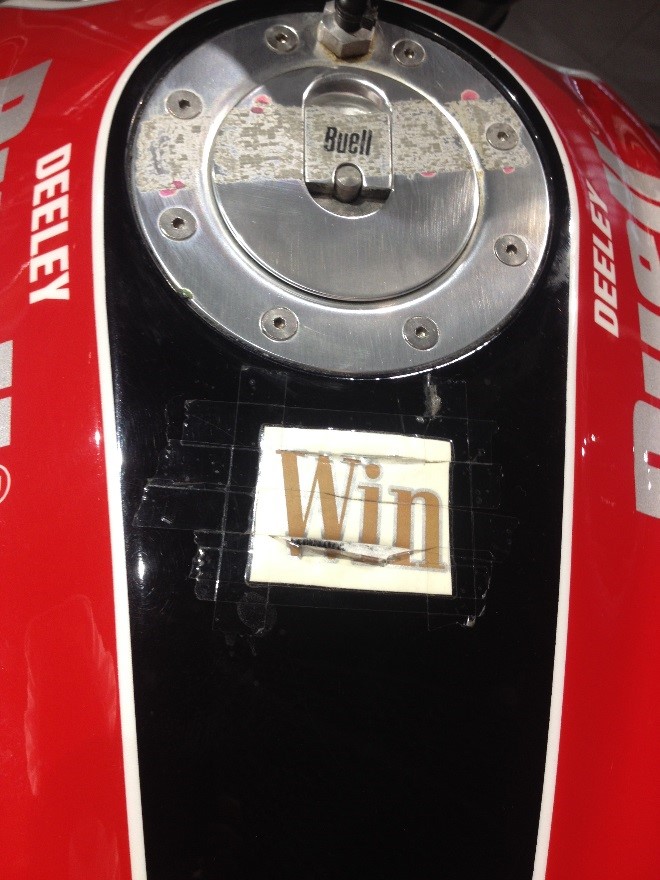
          There is still residue on the gas cap from the wax tape used to seal it after the race inspection. Below it is a piece of paper cut from a pack of Winston cigarettes. “Trev told Team Deeley we had to win so we taped the word ‘Win’ onto the bike for motivation,” says Terry Rea. (Photo courtesy of The Deeley Exhibition).

          The aftermath of the Buell Lightening’s record-breaking run was a huge success for Trev Deeley as he made full use of the bike as a marketing tool. The Lightening was sent on a cross country tour of Canada and sales for Buell motorcycles more than doubled. The next year The House of Buell (Buell dealership) opened its doors on Boundary Road in Vancouver.

          Along with the Buell Lighting S1, Team Deeley raced 3 other bikes at Speed Week 1998. Shane raced a Suzuki Gamma RG500 and Jason McVickers raced both a 580cc Gamma in Modified Gas and a 750cc GSXR Suzuki. All three bikes broke their respective records which still stand today.

          Share This:
          Categories
          What's New

          Hosting a TEDx Event

          Share This:

          What is a TEDx event?

          TEDx events are locally organized gatherings featuring live TED-like talks and videos. Sometimes these are previously recorded at TED conferences, and sometimes they’re new, original content. The purpose of these events is to foster the TED experience within the local community, and the content and design of each TEDx event is unique. They are developed, organized, and hosted locally by visionaries within the community.

          The format, diversity of topics, and community-based (bias-free) content is idea-focused, thought-provoking, and direct. TEDx events are organized by volunteers and lack any commercial, religious, or political agenda. TEDx events are also non-profit events.

          These aren’t events with a single topic, industry, or special-interest agendas. Ideas which spark conversation, connectivity, and community are the word of the day.

          Organizer Responsibilities

          The Organizer’s goal should be to drive the sharing of big ideas, rich storytelling, and the interaction of multiple disciplines. Engineers should be talking to artists, coders should be swapping tales with doctors, and motivational speakers should be busy being motivated by other people’s stories. These are the qualities that make a great TED event – you’re expected to capture the spirit of TED.

          This means unearthing local voices. Who are the undiscovered voices and unknown talents of your community who have the power to influence change and the insight to see it when it’s happening? If you choose to include individual speakers, choose extraordinary people with fresh eyes and strong voices.

          Produce great content to enthrall, entertain, and educate. People should leave the TEDx event feeling like they learned, shared, and experienced a lot in one place, while having their eyes opened to new opportunities.

          Most of all TEDx events are licensed TED events, and you have to apply for a license and be granted one before hosting a TEDx branded event.

          TEDx Rules

          There’s a super straight-forward list of rules setup for TEDx events. These rules are meant to create a framework to preserve the spirit of the TED event, and to make it easier to organize and structure TEDx events in your community.

          Some of the rules are very straight forward, and actually aid in the selection of a venue, for instance:

            • Up to 100 individuals may attend your event. Only individuals who have attended an official TED conference in person may organize an event with more than 100 attendees.
            • Tickets for TEDx events must always be less than $100 USD and should go towards event and operating costs. Based on approval from TED, you can charge an attendance fee for a TEDx event featuring live speakers.

          Some of the rules are there to protect the TED brand, and relate to programming:

            • A minimum of two official, pre-recorded TED Talks must be shown at events which are less than half a day in length. For longer events, 25% of the total number of talks must be official, pre-recorded TED Talks from the talks library.
            • TED and TEDx events are stand-alone events, and may not be co-branded with other events or identities (organization, non-profit, corporation, etc).

          Before you plan on organizing a TEDx event, familiarize yourself with all the rules and read the TEDx Organizer Guide.

          Event Types

          There’s a broad array of different event types available to host.

          There are the standard event, inspired by the TED conference. There are also University and youth events, for events which are hosted at a college or university and organized by current university admins and staff, or catered towards schools and youth communities.

          There are Salon events – small weekly or monthly events – which help to keep a community engaged between regularly scheduled larger events. (In order to organize a Salon event, applicants must already have an existing standard license.)

          There are also TEDxLive and TEDxWomen events, aimed at topics of women and gender, or working with a simulcast of the annual TED Conference. These two categories specifically tend to become global events.

          TED in Vancouver

          Even if you’re not interested in becoming an organizer, you can still get engaged in helping be a part of the action. TEDx events are volunteer organized, planned, and driven events. Without the help of valued volunteers these events can’t happen. Get involved!

          Local TEDx Events in Vancouver include TEDx Stanley Park.

          Deeley Exhibition and Conference Facilities is an ideal and unique venue for a TEDx Event. Our main meeting room can comfortably accommodate 100 seated guests, we have built-in professional A/V and projection, and we are centrally located and accessible by car or transit. IF you’d like information about hosting a TEDx event with us, give us a call.

          Share This:
          Categories
          What's New

          When Lawrence Met Brough: How the death of a legend paved the way for motorcycle safety

          Share This:

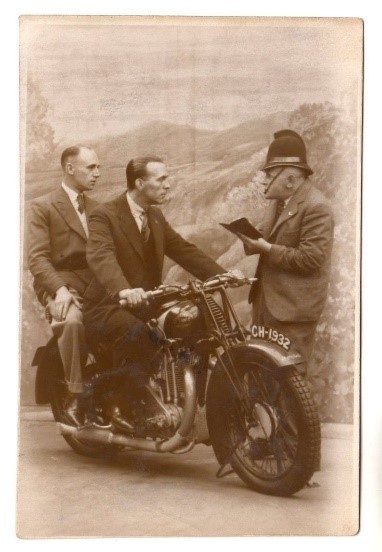
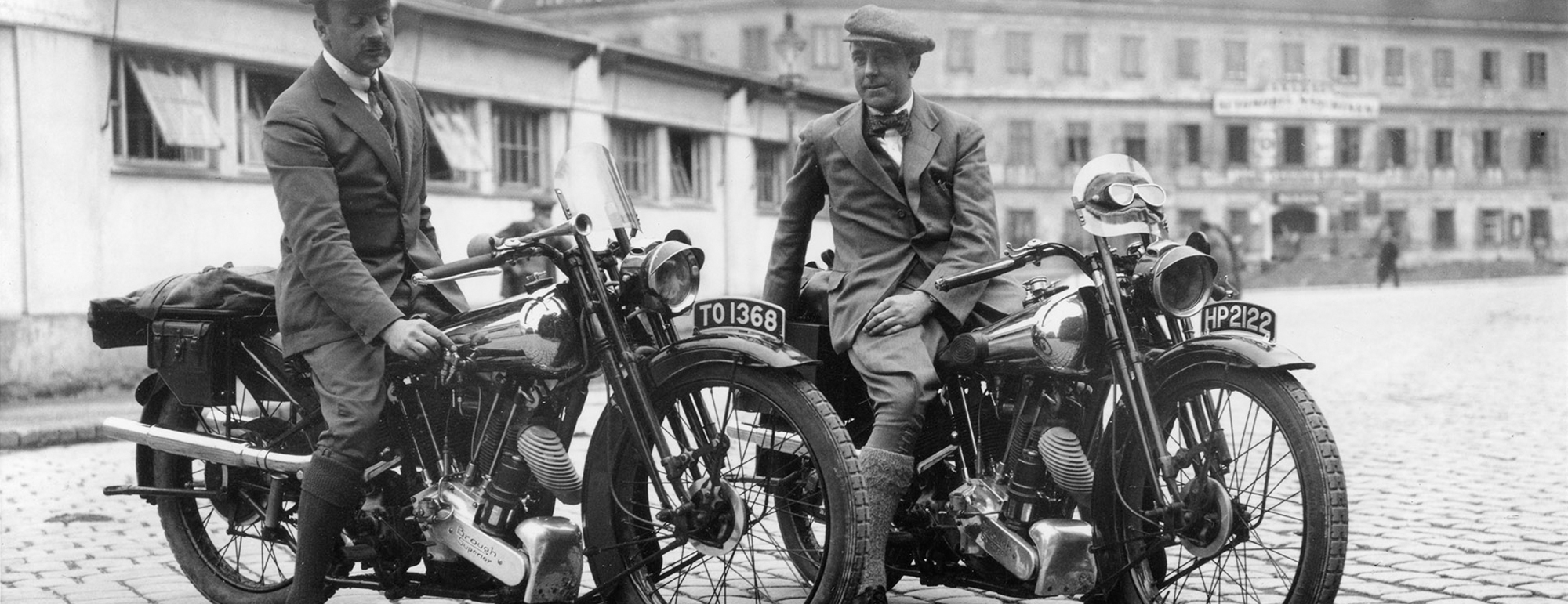
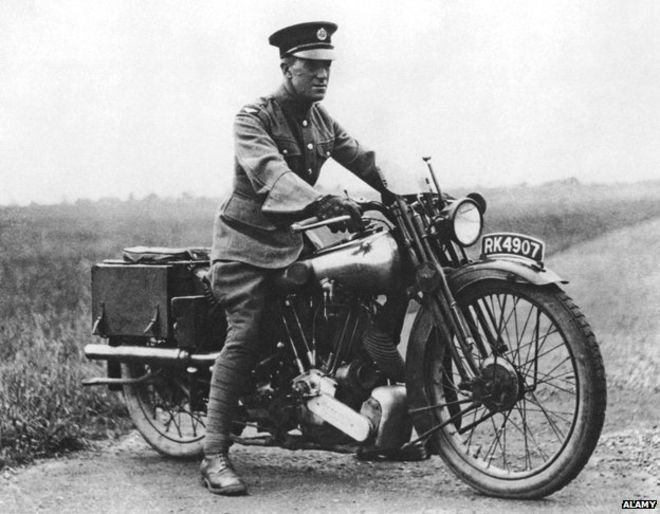
          Described by many as the “Rolls Royce of Motorcycles” in its hey-day, Brough Superior was the pinnacle of luxury motorcycles; appealing to nobility, aristocracy, and even royalty. Starting around 1914, George Brough began developing his brand as a way to branch out from under the shadow of his father’s flat track success. George wanted a motorcycle unlike any other he had encountered before. He wanted to create a motorcycle that fit all of his personal ideals. While still doing War work, Brough took his share of his inheritance and spent his days developing the now iconic brand in a small shop in Nottingham. By 1920 the first advertisement was released. George was an innovator in motorcycles, developing the first prop stand, twin headlamps, crash bars, and interconnected silencers. Although there were four primary models during Brough’s popularity, the SS100, S880, SS680 O.H.V., and the Model 11.50, each Brough motorcycle was customizable, made to each rider’s specifications and needs. This is partially where the exclusivity of the brand comes from, but also, by manufacturing standards, only around 3000 were ever made. Unfortunately, production came to an end during the close of the Second World War, with a recent revival of the brand beginning in 2017. However, our story doesn’t end there.

          Part of Brough Superior’s renown and success came from the prestigious people who owned a Brough. One of the most famous owners and riders of Brough Superiors was T. E. Lawrence, otherwise known as Lawrence of Arabia. Lawrence was a British soldier, scholar, and writer. During the First World War his sympathies with the Arab people brought him to mobilize an Arab revolt in which he led a small force against Turkey that attacked communication and supply routes. Sensationalization of his time in the East led to his fame upon his return to England.

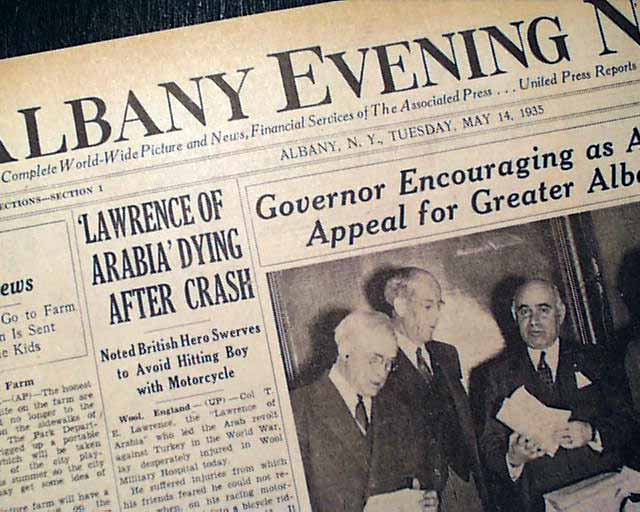
          Lawrence was a proud owner of Brough Superior, having owned eight in his lifetime, describing one of his bikes as, “… a skittish motorcycle with a touch of blood in it.” He even gave his favorite, a 998cc, the nickname of “Boa” which was a shortened version of the Aramaic word meaning “son of thunder.” It was on this 998cc that Lawrence met his tragic end. The story goes that while riding near his Dorset home in England, a small dip in the road blocked his view of a couple of boys on bicycles ahead. Maneuvering to avoid the boys, Lawrence went flying off his bike and hit his uncovered head. Sadly, it was common to ride without a helmet at that time. On May 19th, 1935, six days after the accident, T. E. Lawrence passed away at the age of 46. His death was hailed a “tragic waste” by the New York Times.

          One of the attending medics at the hospital was Hugh Cairns; one of Britain’s first neurosurgeons. Cairns’ post-mortem found that Lawrence had passed away from severe lacerations and damage to the brain. Had he survived, the brain damage would have left him blind and unable to speak. It is speculated, through examination of his diaries, that it was Lawrence’s death that first led Cairns to begin to formulate his thoughts on crash helmets. It wasn’t until six years after Lawrence’s death that Cairn’s, now a consulting neurosurgeon to the Army, published an article in the British Medical Journal on the importance of the crash helmet. His findings showed that in the 21 months leading up to the Second World War, of all the motorcycle deaths in England, 2/3 of those deaths were from head injuries. His conclusion was that crash helmets should be examined more closely, not as an ultimate solution, but as a way to mitigate the amount of motorcycle deaths. In November 1941, the same year as the articles publication, the British Army having been convinced by Cairns, ordered all dispatch riders to wear helmets. It was the coming together of a legendary motorcycle and a legendary man that led to Cairn’s research, and eventually to the widespread use, for both military personnel and civilians, of the crash helmet.

          Share This: